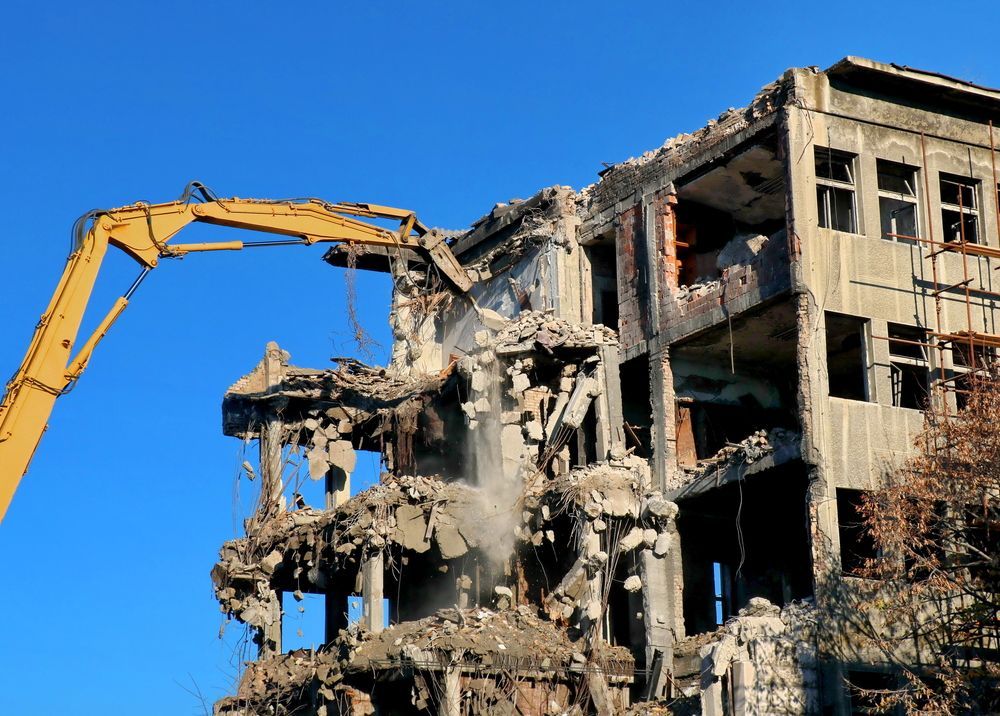
Commercial demolition in Hamilton isn’t the same job as residential work. Tighter timelines, bigger structures, stricter safety requirements, and neighbouring businesses that can’t afford to shut down around your project. You need a contractor who’s done this specific kind of work before, in this specific city.
Delta Group handles commercial demolition projects across Hamilton regularly. Warehouses, retail units, industrial buildings, and mixed-use sites. Here’s what the process actually looks like, what to expect on cost and timeline, and why local experience matters when you’re tearing down a commercial structure.
A commercial teardown has moving parts that residential work doesn’t. The scope starts well before any equipment rolls onto the site.
First comes the assessment. An experienced contractor walks the property, identifies structural specifics, and flags anything that could complicate the work. That includes load-bearing connections with adjacent buildings, shared utilities, underground infrastructure, and any visible signs of hazardous materials.
Next is permitting. The City of Hamilton requires demolition permits for commercial work, and the application process involves site plans, utility disconnection confirmation, and sometimes a designated substance survey. The survey is non-negotiable for older commercial buildings. Hamilton’s industrial building stock includes a lot of structures from the 1950s through the 1970s, which means asbestos, lead, mercury, and other regulated materials are a realistic possibility.
Then there’s the actual demolition work. Commercial sites often require specialized equipment, proper traffic management plans, dust suppression systems, and coordination with surrounding businesses. A good contractor builds all of this into the project schedule from day one.
Hamilton’s industrial corridor has a long history, and warehouse demolition is one of the most common commercial projects in the city. These jobs involve large-scale steel dismantling, concrete slab removal, foundation breaking, and heavy debris hauling. Equipment selection matters. Bringing a residential-scale excavator to a 40,000 sq ft warehouse means doubling your timeline.
Downtown Hamilton and the commercial strips along Upper James, Barton, and King Street see regular retail demolitions as owners redevelop older buildings. These projects often sit next to active businesses, which means dust control, noise management, and site safety are bigger considerations than on an open industrial lot. Coordination with neighbouring tenants is essential.
Not every project means bringing the whole building down. Interior strip-outs for tenant improvements, selective demolition for renovations, and partial structural removal are common in Hamilton’s commercial market. Selective demolition requires more precision because what stays has to remain fully intact. Rushed or careless crews cause expensive damage to the portions you’re keeping.
Full industrial site demolitions are the most complex commercial jobs in Hamilton. Equipment decommissioning, hazardous material abatement, structural steel removal, and site remediation often all happen on the same project. You want a contractor with the crew size and equipment to handle every phase, not one juggling three subcontractors.
Commercial demolition pricing varies more than residential work because the scope varies more. Here’s what moves the number up or down:
Building size and construction type. A 5,000 sq ft strip mall unit is a completely different job than a 30,000 sq ft industrial building with reinforced concrete and structural steel. Material type drives equipment selection and labour hours.
Hazardous material presence. Commercial buildings from before 1990 almost always have designated substances that require professional abatement. Asbestos removal alone can add $10,000 to $50,000 or more, depending on the scope. A legitimate contractor factors this into the quote upfront after a proper designated substance survey.
Site access and logistics. Tight urban lots in downtown Hamilton with limited equipment access take longer than open industrial properties with easy truck turnaround. Overhead hydro, adjacent structures, and public right-of-way impacts all affect pricing.
Disposal and recycling requirements. Commercial demolition generates significant volumes of concrete, steel, wood, and mixed debris. Disposal fees have climbed across Ontario, and separating materials for recycling is both environmentally responsible and often cost-effective on larger jobs.
Permit and inspection costs. Commercial permits in Hamilton run higher than residential, and larger projects may require additional inspections or specific municipal approvals.
Every Ontario city has its own permit process quirks, and Hamilton is no exception. The City requires that utilities be properly disconnected before any demolition work begins, with written confirmation from Alectra Utilities, Enbridge, and the Horizon Utilities water services group, depending on the site.
For older commercial buildings, a designated substance survey must be completed by a qualified professional before demolition permit approval. This identifies asbestos, lead, mercury, silica, and other substances regulated under Ontario’s Occupational Health and Safety Act. You can review the full list of designated substances through the Ontario Ministry of Labour’s designated substances page.
Hamilton also has active enforcement around dust and noise, particularly in mixed-use neighbourhoods. Dust suppression systems and scheduled work hours are standard requirements on most urban commercial demolitions.
Commercial demolition in Ontario requires a properly licensed contractor with general liability insurance (typically $5 million or more on commercial work) and full WSIB coverage. Ask for certificates before signing anything. A contractor who hesitates is telling you everything you need to know.
Some companies bid on commercial work and then subcontract everything. That creates coordination problems, inflates costs, and puts your timeline at risk. A contractor with their own crew and their own equipment controls the schedule and the quality. Delta Group operates this way, which is why we can actually commit to timelines and hold them.
If your commercial building was constructed before 1990, your contractor needs to know how to coordinate a designated substance survey and manage the abatement that usually follows. This isn’t optional under Ontario law, and getting it wrong creates serious legal exposure.
A proper commercial demolition quote breaks down the scope clearly. Permits, abatement, structural demolition, foundation removal, debris disposal, site grading, and any remediation work should all be itemized. Lump-sum quotes with vague scopes are where projects go sideways.
We’re based in Oakville, which means Hamilton is part of our core service area, not a stretch. Our crews work in Hamilton regularly on commercial and industrial projects. We bring our own equipment, our own operators, and our own project management to every job.
Our commercial demolition services in Hamilton cover the full scope: initial site assessment, permit coordination, designated substance survey management, full structural demolition, concrete and foundation removal, debris disposal with responsible recycling, and final site preparation for whatever comes next.
We give you a clear quote with no hidden costs. You’ll know what you’re paying before the work starts, and the number won’t change unless the scope does.
Planning a commercial teardown, warehouse demolition, or selective interior project in Hamilton? Call us at 905-849-9900 or reach out through our website. We’ll walk the site with you, answer your questions directly, and put together a detailed quote that reflects the actual scope of the work.
Delta Group serves Hamilton, Oakville, Burlington, Mississauga, Toronto, Vaughan, Milton, and the surrounding GTA.
Check out our Demolition page, Click Here!
Work With Us — Click Here!
Follow our Instagram, Click Here!