Site servicing Hamilton; Hamilton’s growth corridors keep moving. Waterdown, Binbrook, Stoney Creek Mountain, and the ongoing commercial redevelopment along the waterfront and in Dundas. Every project needs site servicing before anything else can happen. Water mains, sanitary sewers, storm drainage, grading, road infrastructure. All of it has to be designed, approved, and installed properly before construction can move forward.
Delta Group works as a site servicing contractor in Hamilton on residential subdivisions, custom home builds, commercial developments, industrial sites, and infill projects. Here’s what proper site servicing involves in Hamilton specifically, what makes this city’s regulatory setup different from the rest of the GTA, and how to pick a contractor who’ll get your project through approvals without wasting your timeline.
What Site Servicing in Hamilton Actually Covers
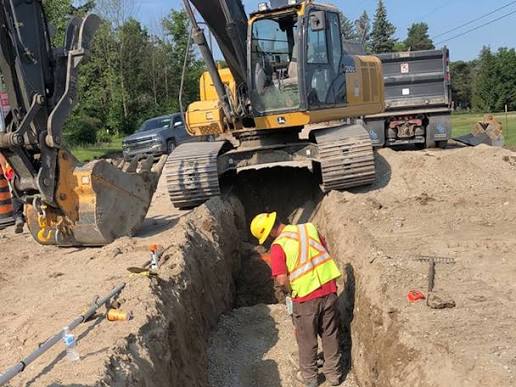
Site servicing is the whole package of underground utility and surface infrastructure work that connects your property to municipal systems. Not one trade. A coordinated scope that includes trenching, pipe installation, testing, grading, and surface restoration. All of it built to comply with the City of Hamilton, Hamilton Conservation Authority, and the Ontario Building Code.
Typical scope includes excavation and trenching for utility runs, water main installation and service connections, sanitary sewer and lateral work, storm sewer systems with catch basins and detention features, hydro and telecom conduit, road subgrade prep, curb and gutter, asphalt paving, line painting, and final site grading.
Hamilton’s regulatory setup is different from most GTA cities. The City directly operates water and wastewater systems, which means you deal with Hamilton Water for connections rather than a regional utility. That changes some of the coordination compared to projects in Peel, York, Halton, or Niagara Region.
Hamilton Conservation Authority (HCA) reviews work affecting regulated areas across its jurisdiction, which covers most of the city. Properties near Red Hill Creek, Spencer Creek, Grindstone Creek, or along the Niagara Escarpment usually trigger HCA review on top of the City’s own permit process.
A contractor who doesn’t know Hamilton’s specific approval setup gets tripped up on the first submission and slows everything down.
Types of Site Servicing Projects in Hamilton
Subdivision Development
Hamilton’s growth areas keep producing significant subdivision work. Waterdown has been active for years. Binbrook has continued expanding. Stoney Creek Mountain and parts of upper Hamilton see ongoing new subdivision activity. Full subdivision site servicing means kilometres of watermain and sewer, multiple street networks, lot-by-lot service connections, stormwater management facilities, and complete road construction from subgrade through asphalt.
These projects take months and require deep coordination with the City, HCA, and sometimes conservation authority reviews depending on proximity to regulated areas. Contractors who’ve done Hamilton subdivision work before move faster because they know the process.
Commercial and Industrial Site Servicing
Hamilton’s industrial base along the waterfront, Burlington Street corridor, and expanding light industrial areas drive constant demand. Warehousing, manufacturing, logistics, and commercial redevelopment all need commercial-grade site servicing. Fire protection watermains, expanded sanitary capacity, larger stormwater detention systems, and heavier-duty paving built for truck traffic.
Hamilton’s industrial heritage means a lot of commercial site servicing involves working around aging infrastructure, legacy utility routing, and sometimes contaminated sites requiring remediation coordination.
Custom Home and Infill Site Servicing
Custom home builders working in Ancaster, Dundas, Waterdown, and the Hamilton Mountain need site servicing for new builds and infill projects. Service connections to existing municipal mains, lot-specific grading, driveway aprons, and drainage work. Older neighbourhoods like Kirkendall, Westdale, and downtown Hamilton have aging infrastructure requiring careful coordination during new connections.
Multi-Unit Residential
Townhouse blocks, condo developments, and stacked townhome projects need site servicing handling multiple service connections, internal drainage systems, and shared utility infrastructure within the development. Hamilton has seen steady multi-unit residential growth, particularly in intensification corridors.
Niagara Escarpment Sites
Properties along the Niagara Escarpment fringe have specific challenges. Fractured shale, shallow bedrock, grade changes, and biosphere reserve considerations. Site servicing on escarpment-adjacent properties often requires specialized excavation, more complex stormwater management, and additional environmental review. A contractor unfamiliar with escarpment conditions discovers the geology on your project timeline.
What Hamilton and HCA Actually Require
Hamilton’s unique regulatory setup means slightly different coordination than other GTA cities.
The City of Hamilton handles development applications, site plan approvals, engineering reviews, permits for grading and local roads, and water and wastewater connections. Hamilton Water (the City’s utility arm) coordinates service connections to municipal watermains and sanitary sewers directly. That’s different from Peel, York, or Halton where regional utilities handle this separately from the local city.
Hamilton Conservation Authority covers most of the city and reviews work affecting watercourses, wetlands, floodplains, and valley lands. Projects along Red Hill Creek, Spencer Creek, Grindstone Creek, Chedoke Creek, or the Niagara Escarpment usually trigger HCA permits in addition to City approvals.
Before servicing work starts, projects need approved engineered drawings. Site grading plans, servicing plans, stormwater management reports, erosion and sediment control plans. Everything stamped by a Professional Engineer licensed in Ontario. You can review Hamilton’s development-related requirements through the City of Hamilton development planning page.
Inspections happen throughout the work. Watermain testing and chlorination, sanitary and storm sewer testing, granular base inspections, asphalt paving, final grading. All of it has to be passed and documented before the project closes out and the City releases holdbacks.
What Drives Site Servicing Cost in Hamilton
Site servicing pricing varies more than most construction work because everything depends on site specifics. Here’s what moves the number.
Project size. Subdivision-scale work with kilometres of utilities runs dramatically higher than single-lot custom home servicing. Unit pricing improves with scale but total dollars grow with linear footage.
Soil and site conditions. Hamilton soil varies significantly. Heavy clay on the Mountain, sandier material near the waterfront, and shale or rock near the Niagara Escarpment. Sites requiring hammer excavation, specialized equipment, or dewatering cost more.
Stormwater management. HCA has strict stormwater management requirements due to the sensitivity of Hamilton’s watershed systems. Detention ponds, underground storage systems, oil/grit separators, and erosion controls add real cost to projects with significant impermeable surfaces.
Escarpment considerations. Properties along the Niagara Escarpment fringe may fall under additional Niagara Escarpment Commission review, which can add approval time and specific design requirements.
Distance to municipal mains. Properties further from existing watermains or sanitary sewers need longer service runs. More linear footage means more material and more labour. Hamilton has areas where existing infrastructure is older and connections require more careful work than in newer growth corridors.
Legacy infrastructure. Older Hamilton neighbourhoods have aging utility infrastructure that requires careful coordination during new connections. Some areas have combined sewers that complicate service work.
Permit fees and development charges. Hamilton development charges have climbed. Permit fees, engineering inspection fees, and security deposits all factor in.
Restoration scope. Sites needing extensive road restoration, full curb and gutter, and complete asphalt cost more than projects with simpler restoration.
Why Local Hamilton Experience Matters
Contractors who work Hamilton regularly know what to expect. Specific personnel at City engineering and Hamilton Water. HCA’s review priorities. Local soil variations across neighbourhoods. The specific challenges of escarpment-adjacent work. Realistic permit timelines for different approval types.
Contractors coming in from outside figure all of it out on your project. That means missed inspections, rejected submissions, and slower approvals. None of it comes back as a credit on your invoice.
Hamilton also has infrastructure age variations that other GTA cities don’t deal with the same way. Downtown and older neighbourhoods have utility systems dating back decades. New connections require careful work and sometimes creative solutions. Growing suburbs have newer infrastructure with different constraints. Contractors active in Hamilton know how to work both sides of this.
What to Look for in a Hamilton Site Servicing Contractor
Direct Hamilton Experience
Ask for recent project references in Hamilton specifically. Subdivisions completed, commercial sites serviced, industrial projects delivered. References from active Hamilton projects matter more than generic GTA experience.
Coordination With Hamilton Water and HCA
Working in Hamilton means dealing with the City directly for water and wastewater (not a regional utility) and HCA on most projects of any size. Your contractor needs actual experience with these approvals, not just a claim they can handle it.
Proper Licensing, Insurance, and WSIB
Site servicing contractors need meaningful liability insurance (usually $5 million minimum on commercial and subdivision work), MECP registration where applicable, and full WSIB coverage. Ask for certificates.
In-House Equipment and Crews
Site servicing is heavy equipment work. Excavators, trenchers, compactors, pavers, graders. Contractors who own their equipment and run their own crews control the schedule. Subcontracted work creates coordination problems and timeline risk.
Coordination With Consulting Engineers
Your contractor needs to work cleanly with the consulting engineer, City inspectors, HCA reviewers, and utility coordinators. Contractors who argue with engineers instead of building to drawings create problems.
Full-Scope Capability
Some site servicing companies only do underground utilities. Others only do roads and surface work. A full-scope contractor handling excavation, underground services, road construction, grading, and surface restoration eliminates coordination problems between multiple contractors on the same site.
Transparent Quoting
Proper site servicing quotes break out earthworks, watermain, sanitary sewer, storm sewer, hydro and telecom conduit, road subbase, asphalt, curbs and gutters, grading, and restoration as separate line items. Lump-sum quotes hide too much.
Why Delta Group Works for Hamilton Site Servicing
Delta Group is based in Oakville and works across Hamilton and the surrounding Halton-Hamilton region regularly. Hamilton is part of our core service area, not a stretch destination. We bring full in-house crews and equipment to every phase of site servicing work.
Our site servicing capabilities in Hamilton cover earthworks and excavation, watermain installation and service connections, sanitary sewer and lateral installation, storm sewer systems and catch basins, stormwater management facilities, hydro and telecom conduit, road subgrade prep, asphalt paving, line painting, curbs and gutters, retaining walls, site grading, and full surface restoration.
We work to engineered drawings without arguing with the engineer. We coordinate with the City of Hamilton, Hamilton Water, HCA, and the Niagara Escarpment Commission depending on project location. We deliver on schedule.
The bigger advantage on Hamilton projects: we handle demolition, excavation, shoring, and concrete foundation work in-house too. Hamilton custom home builds in Ancaster or Dundas, infill rebuilds in Westdale or Kirkendall, and commercial redevelopments all usually need multiple scopes. Having one company manage the sequence eliminates handoff problems that come up when three or four separate contractors try to work around each other. That matters more on Hamilton escarpment-adjacent sites where geology can force scope changes mid-project.
Clear quotes with itemized scope. The number you sign is what you pay unless the scope genuinely changes.
Get a Quote
Planning a subdivision, custom home, commercial development, industrial site, or infill project in Hamilton, Ancaster, Dundas, Waterdown, Stoney Creek, or surrounding areas? Call us at 905-849-9900 or reach out through the website. We’ll review the drawings, walk the site, and put together a real proposal that reflects the actual scope.
Delta Group serves Hamilton, Ancaster, Dundas, Stoney Creek, Waterdown, Burlington, Oakville, Grimsby, and the surrounding Halton and Hamilton regions.